
Last week I suggested why asset management – at its early and basic level – is unstable. Getting your data reliable and customised so that you get credibility with your community is time consuming. But it pays! It not only protect your assets – it also protects your staff!
Let me tell you a story
This is a true story about a certain council in New South Wales. In June 2007, during a wild storm, a section of the road collapsed causing a vehicle with 5 people to plunge into the flooded creek below. A mother, a father, their two children and another woman, a family friend all died.
The cause turned out to be an unlined culvert that had given way. In the subsequent coroner’s investigation it was revealed that:
• The council had been aware of the problem with the road as early as 2002 and had prepared an estimate to reconstruct the entire culvert but that details were never entered into the record management system.
• In 2004, pavement repairs triggered a request by the council’s asset manager to ask for quotes for concrete lining of the culvert with tenders called. But again, the information was not entered into the record system and no follow-up action was taken.
• Emails with quotes for roadwork that may have averted the collapse were not considered official records and were not recorded.
• A key finding of the review was ‘that at the time of the road collapse council’s inadequate reporting practices led to a failure to identify the critical need to upgrade some of its key road infrastructure’
Internet comment on the report of the accident was savage
“Too little too late. Good to see our rate money going towards incompetent council workers who hide behind their computers pretending to be busy. And when the accident did happen they actually had the nerve to try to pass the blame to the state /federal government. This accident should not have happened. For the lazy workers who didn’t do their job properly, how do you sleep at night?”
Is it a case of ‘lazy workers’ or did the system fail them? Unless your system is sound,how would you know? More especially how can they demonstrate their diligence to the outside world?
A poor asset management system puts your staff at risk!
The Central Coast’s ‘Express Advocate’ reported the mother of the young woman whose family perished as saying that she hoped the people who made the human error think about it every night. ‘We certainly do. They have destroyed our family’.
No member of your staff should have to live with this responsibility!
And, although reported as ‘human error’, if you look at the numbers of different people involved in this story, you have to ask yourself whether it is really ‘human error’ or actually ‘system error’.
Now the Coroner’s report was covered in both of the local papers. The reporting was noteworthy for two reasons: One: because both journalists actually used the term ‘asset management’ in their reports, and Two: because both reported that whilst asset was not good at the time of the accident, it was now ‘best practice’.
I was curious.
What had happened to improve asset management so much between the accident in June 2007 and the Coroners Report in March 2009? (less than 2 years) And what was it that impressed the journalists so much that they both reported that the council was now ‘best practice’ in asset management.
I decided to visit the council and find out. When I walked into the foyer, on the wall facing the entrance was their ‘mission statement’. It said simply “We aim to be a council that the community is proud of” and underneath it said “We are not there yet!”
That told me a lot about the current attitude of that council and their determination to get better.
Then I met with the Asset Manager and his Director of Information Services. Both were extremely open, articulate, knowledgeable – and very enthusiastic about asset management. They knew they had to improve their asset information and had taken serious steps in this direction.
But they also knew that improving asset information alone is not enough. They knew they also had to understand and improve their processes. And this is where they really shone. They analysed and streamlined each of their processes. There were dozens of these processes, each reproduced in large A3 size – and laminated, indicating that these were for constant use. They were bound in sections relating to different functions.
Mapping is a great way to understand your processes – and a great way to show others that you understand them! My guess is that it was these graphics that so impressed the journalists!
Taken together,
- greatly improved information +
- A positive, action-oriented, attitude – as expressed by the foyer plague and the confidence and knowledge of the Asset Manager and his Director of Information Services +
- Understanding of Asset Management Processes – as illustrated by the process maps,…
all added up to a situation where two different journalists from separate papers, in reporting the story of council failure, would both modify their criticism by making it clear to their readers that the council’s asset management was now ‘best practice’.
But there was an even better result.
After the coroner’s findings had been handed down with all the attendant publicity, the Sydney Morning Herald reported on yet another culvert in poor condition in the council area. In ordinary circumstances you would have expected the press to have a field day with this. But it didn’t happen.
Despite the obvious cracks and poor condition of the culvert, the Sydney Morning Herald’s journalist provided very balanced and moderate coverage. He quoted the consulting engineer’s findings, made some criticisms of the council but then tempered the report with the recognition that the cost to repair the problem was high relative to the annual budget; actually quoted figures, and comment by other councils about this problem and recognised that a large part of the problem was that the roads were handed over to councils by the State Government, who had previously had responsibility for them, with insufficient maintenance funds attached.
What price would you pay for fair media coverage?
Next week I look at why even good asset management is not enough. Why we have to ‘go beyond’.
[/et_pb_text][/et_pb_column][/et_pb_row][/et_pb_section]
I have long been interested in one particular aspect of the history of asset management. Why was it that agencies would so often progress to the stage of being the envy of all others in terms of their asset management – only to collapse and have to rediscover everything they previously knew? I suspected that there must be something inherently unstable about asset management – and there is! Here I explain what the problem is and how you can make sure it doesn’t happen to you.
You are going to come across a lot of definitions of asset management. Maybe you already have. All have validity. But the one that I favour at the moment has a focus not on what asset management does – but rather on what we get out of doing it!
I look at asset management as ‘a series of process and information improvements that enable organisations to see not only the likely consequences of the decisions taken today – but also of the actions not taken.’ You can argue with this definition, but bear with me, because you will see how it can help.
When armed with a knowledge of likely consequences you can make better decisions. You may not have enough money to do everything, but if you understand the consequences you can be reasonably confident that the things you are doing are at least of greater value to your organisation or community than the things you are not. Even more importantly, you can demonstrate this to others.
Asset management protects you. If you are a councillor, it protects you from pressure by lobbyists and those who would have you spend council resources in ways which you know are sub-optimal. If you are an administrator, it enables you weigh up different uses of your limited resources. If you are a manager responsible for assets, it enables you to know what to do that will best meet the service needs of the community.The key word is ‘consequences’.
When you can tell what is likely to happen next as a result of the actions you take today – and of your inactions – you are able to make better decisions and make them with confidence. And when you are able to demonstrate this to others and gain their confidence, life becomes much more enjoyable.
 Driving in the Dark
Without asset management, you are operating in the dark. It’s like driving at night with your headlights showing you just a few metres of the coming road. You are only able to see a little way ahead, and all of your decision making, whether on short or long term goals, is constrained by having such a limited view. So you have to move cautiously, never quite sure what those shadows mean, or what is coming next. And you can easily miss your turning and have to make time wasting course corrections. Or at worse, run into something with expensive, maybe fatal, results.
 Introducing asset management is now like switching on your high beam.
Suddenly, with a better view of the likely consequences of your actions, you can now see a long distance in front. You can move forward more confidently, make better decisions, and avoid potential problems, because you understand the likely consequences of actions and inaction.This is very exciting and it is not difficult to see why asset management creates evangelists. Many of you will have experienced this in the early stages of asset management, when, perhaps for the first time, you now have an overall view of your asset base, a better understanding of what you have, what condition it is in, and what its value is. This gives you a completely different view of what you can do – and it is pretty heady stuff.
But a word of caution!
What I have learnt is that when you reach this stage, you must not stop. The High Beam stage is unstable. When you are on the road, any approaching vehicle can force you to switch them off. Similarly when you are starting asset management, and you adopt generic assumptions about asset lives and desired service levels to get yourselves started, you get a ‘great leap forward’. This is the ‘switching on the high beams’ stage. It enables you to make progress quickly.
As in all things, easy come – easy go!
When things get tough – the asset management equivalent of the oncoming traffic – you can no longer rely on those generic assumptions and service levels. In times of trouble, such as missed grants, unexpected and unfunded asset renewals, in fact any difficulty, your staff and your ratepayers need to have full confidence in the reliability of your system and this means that you need to move on from the generic data and develop information that is credibly yours. In other words, you need to customise, to make the service levels and associated asset lives your own.
To do this you need to work with your community to develop service levels that are widely understood and accepted and can withstand criticisms.
Your asset data needs to reflect these service levels and to demonstrate the reliability that comes from documented, efficient, update mechanisms. Your asset lives need to reflect your own local conditions and known maintenance histories. And you need robust processes to ensure that all new asset acquisition reflects your strategic directions.
This takes effort, commitment – and time.
However, once you have done this, you are largely failure proof. By the time you have developed a good understanding throughout your staff from field staff to CEO, board or councillors, by the time you have good, up-to-date data, and by the time you have the confidence that this brings, then your asset management is secure.
You have successfully navigated the instability phase and come out safely on the other side. This stage of asset management is like adopting a Satellite Navigation System. Now you can analyse all the options and choosing the optimum course is easy.
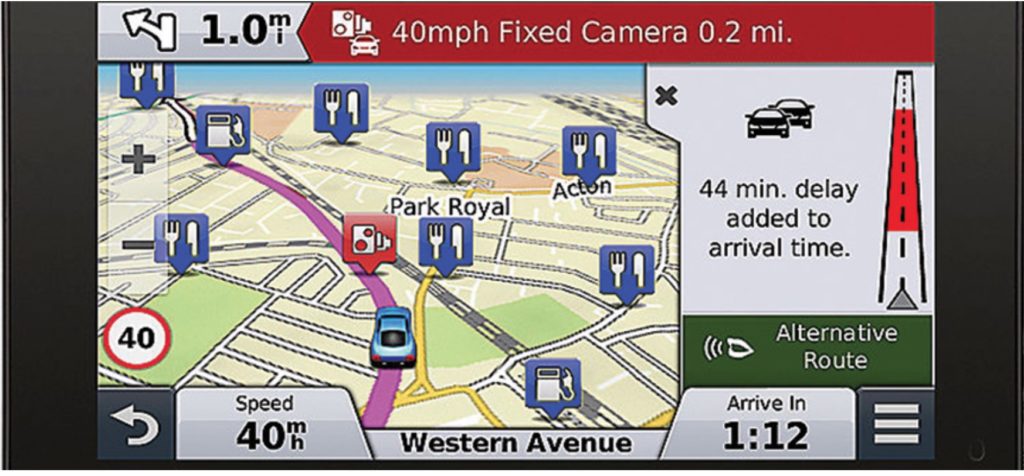
Moreover, when you get here you won’t want to stop. Now, asset management improvement for the benefit of your community will simply be the way you do business and you will enjoy always seeking to do better. The Road Ahead is now clearer and you travel it with confidence.
Questions?
- Where are you on the road to sound, reliable asset management?
- Are you still at the stage where you are using general purpose asset lives, gleaned from somewhere else? Or have you customised?
- Have you established accountable service levels? And are these service levels clearly and transparently connected to your asset life data? Do they inform your understanding of effective age and time to renewal?
- Have you reviewed, updated and streamlined your asset management practices?
Think this is too much work?
Then be sure to read next week’s post where we look at the danger not only for your assets, but for your staff ,of not getting to this stage of asset management.
Next Week: AM Protects – your staff!
Yesterday I posted IDM in Pictures 3/12. IDM stands for Infrastructure Decision Making. You can think of IDM either as the next stage after strategic asset management or as an intermediary stage between 20th century physical infrastructure and a 21st century that will be increasingly cyber or cyber augmented, but the shape of which we do not yet know. Infrastructure decision making is about asking those questions that will help us make the adjustments we will need to make.
For example, consider the rise of e-sports, a.k.a competitive video gaming. What impact might this have – on physical sports and on our sports infrastructure? Already a $1.5 billion business, it is increasing at 30% p.a. and projected to continue this rate of growth for at least the next five years. How many of our recent stadiums and those now being built have factored in this rate of growth for e-sports – and the possible concommitant impact on physical sports? So far it has mainly affected Asia and North America. However Australia joined the excitement early this year with major tournaments in Melbourne and Sydney. Do our current sports stadiums lend themselves to housing these events? The physical requirements of e-sports in Sydney (pictured) required the design and construction of a purpose-built elevated stage housed in a movie theatre complex. E-sports require high speed internet access and present high intensity light shows, music, dancing along with the video gaming competition. In Asia and North America they can attract crowds of 100,000.
In times of uncertainty we often seek comfort in resorting to what we have always done and are therefore confident that we know how to do. This may give temporary relief from the stress of the unknown but it only pushes the decision making further out whilst making the decisions harder when they come due again, and this is likely to be much sooner than we think. The consequence of doing this in the recent past may be why we are now hearing the term ‘playing catch up’ from our political pundits like Jeff Kennett. I don’t like this term, or the idea it implies. Why catch up when by the time that we do, what we are catching up with will already have passed?
The earlier we pay attention to future issues and start thinking – and talking- about the changes needed – in mindset, technology, principles and practices – the easier our adjustment task will become.
 There was a time when I would be in and out of an art gallery in 30 minutes, bored. I looked, but did not engage. Then at a Picasso Exhibition, i found paintings that I really liked, but also many that turned me off completely. After viewing all, I went back and studied these two groups and asked Why? Now galleries are no longer boring. I apply the same process to conference talks. I note all the new ideas, the new linkages that really please me and write them down so that I can think more about them later, and I also note those statements that drive me nuts, and I think about these as well. No prizes for guessing what category the ‘heretical questions’ in the last post fell into.
But the IPWEA Congress this week, ‘Communities For the Future, Infrastructure for the Next Generation’ was far richer in yielding good new ideas, thoughtful linkages, and new ways of expressing accepted ideas so that they come to life and are taken out of the realm of platitudes. These deserve a far wider coverage, and so, with the support of our podcast partner, the IPWEA, we will be bringing you these ideas, and many others, in our forthcoming podcast series. Watch for it!
Or better still, join the Talking Infrastructure Community (click here) (its free!) and you will be the first to know when we launch.
A closing note: At an after lunch session in Parliament House many years ago, the talk was so boring I found it a hard job to keep my eyes open. Yet my colleague was riveted! He was listening intently and taking notes. At the end I sighed and said ‘That was a really boring talk’. ‘Absolutely’, he agreed. Surprised I responded ‘But you were riveted, paying great attention, taking notes, how come?’
His reply? ‘To make so boring a presentation, there must be many things he was doing wrong. I just wanted to figure out what they all were!’ Be engaged!
A heresy is a belief or opinion contrary to the orthodox (usually for religion, but applicable more generally) Here are someheretical questions in the asset management/infrastructure decision making field.
Heretical Question 1. Spend better or spend faster? An economist speaking at the IPWEA Congress in Canberra recently, argued that a greater spend on infrastructure was better ‘performance’. But is it? Jeff Kennett, former Victorian Premier, complained that 26% of funding allocated for capital construction had not been spent. He blamed over cautious bureaucrats. Both are focused on the size of the spend – and not what the money is being spent on. Is this really in the community interest? Or is this attitude (not confined to Australia) a contributing factor to the increasing evidence that infrastructure funds are poorly planned and many demonstrably lacking in justification? (cf Joseph Berechman ‘The Infrastructure we Ride On’ 2018)
Heretical Question 2. What is the purpose of infrastructure? And what should it be? Wearing our ‘better angels’ halo we say we are building for the future, but is this really true? If we were, would we not have a well developed vision of the future that we wished to create, and an infrastructure decision process that enabled us to plan to achieve it – and to adapt those plans as changes occur? Where is that vision? Where are those decision processes?
Heretical Question 3. The pipeline. An economist spoke of waves of capital expenditure and was concerned at the lack of a pipeline of projects that would maintain construction activity in the near future. Another speaker commented to the effect that Australia should ‘prioritise infrastructure’. But should it? Why? A pipeline of construction projects will ensure work in the construction industry. But the construction industry represents only about 10% of total employment. Why should we spend massive amounts of capital to ensure the jobs to privilege such a small section of the economy?
Heretical Question 4. Multipliers. You might argue that construction expenditure generates much more by way of multipliers – three times as much according to one speaker. Really? Where is the evidence for this? Many people blithely quote figures such as this, but cannot justify them. Construction expenditure does create jobs. ANY expenditure creates jobs. If the people who receive the income go out and spend it, other people benefit. This much makes sense. But how much of a large construction contract goes to the rich who may save rather than spend, and how much of the rest goes to workers who do not know where their next job is going to come from, and thus will tend to save more than spend? Wouldn’t a permanent maintenance job do more good for the economy than a short term construction contract. Or the same amount of money spent on nurses or teachers?
Heretical Question 5. Supply driven infrastructure. Jeff Kennett argued that we would do well to follow up projects with more projects to take advantage of the, now unemployed, workers completing the first job. In other words build infrastructure to provide jobs. Is this sensible? Tasmania in the late 1980s came to grief over this. With little employment in the North, infrastructure projects were created to provide jobs. The projects not only provided work for the unemployed in the north, but they attracted others from around the state so that when the project finished, there was now a bigger pool of unemployed, demanding a bigger project – and so on. Now most of the Tasmanian population is in the South so the infrastructure was largely underutilised. As a result of this expenditure, the state came close to bankruptcy. So, is this really a sensible idea?
Heretical Question 6. Vision/Plan. We have a tendency to use these words interchangeably, but is this sensible and safe? A plan is a set of actions designed to secure a goal or objective. A vision is an idea of some future state that we would like to achieve. Affordable healthcare could be a vision. A set of projects including asset and non-asset solutions could be in a plan. As technology, demographics, environment, governance and public attitudes change and information is acquired, we would have a succession of plans, all adapting to the current circumstances but addressing the vision. The vision may be a 50 year vision (even a 7th generation vision) but we would surely not wish to commit ourselves to a 50 year set of projects conditioned by only what we know now.
Feel free to add your own heretical questions.
Media articles often leave infrastructure questions dangling. QUESTIONS ARISING is an opportunity for those of you who read widely and keep their eye on what is happening to identify these articles and the questions that need to be answered. These can then be addressed in our forthcoming podcast series, so get involved – add your questions to those listed here, suggest possible lines of development, add new media articles along with the questions they raise. Sources may be the daily journals, the web, podcasts, radio, TV. Plenty of scope!
Here to introduce our first QUESTIONS ARISING are two items identified by our Business Development Manager, Ian Spangler.
1. The Economist’s Intelligence Unit’s recent report on “Preparing for Disruption: technological readiness ranking, 2018”, places Australia in the top ten for the historical priod (2013-2017) BUT it forecasts that in the next five years, Australia, Singapore and Sweden will take over as the top-scoring locations. The ranking is based on the number of mobile phone connections and internet access.
Questions arising.
- Is this enough to ensure technological readiness?
- What else should we be looking at to test readiness?
- Australians, who are not easily overawed by authority, may well joyfully take up the idea of disruption, but to what end?
- How can we tell whethe our innovation is well directed?
- What else? Add your comments below.
2. The small homes project was recently launched in Melbourne. The RACV reports that “from the 1950s, Australia’s average house size more than doubled to 248 square metres at its peak in 2008-09. Then last year something strange happened: the size of new builds dropped. Over the past 20 years, median house prices across the country have gone up by more than 300 per cent while weekly wages have only increased 121 per cent. Rising cost-of-living pressures are also draining our bank accounts, with the average annual energy bill in Victoria now around $1667. Building and running a big house is not cheap and it is not great for the environment.”
Questions arising
- The ability of the demonstration small home to provide so much convenience in such a small space is its use of 4G and 5G connectivity. How do you see this affecting futur constructions?
- Will we continue to reduce the size of our dwellings? If so, what factors may come into play? If not, why not?
- If our dwelling size does decline markedly, what impact might this have on other infrastructure?
- Other Questions
Three great days in Melbourne in which I met with many asset managers for talks over coffee (or the hard stuff).
The benefits of a podcast series addressing future change and its impact on infrastructure decisions today was readily recognised and the ability of the podcast to draw from the perspectives not only of those who are responsible for the supply of public infrastructure, (decision makers, analysts, managers and advisors) but also those who rely on infrastructure to achieve community and commercial outcomes was seen as something that people wanted to be involved in. Think those who supply and those who rely!
I was able to meet with Anne Gibbs, the current CEO of the Asset Management Council, who has been extremely helpful in providing follow up material, and with Sally Nugent, the former CEO, as well as a number of active AMC members including Andrew Sarah, Greg Williams and Kieran Skelton. I also had a very positive meeting with Jaimie Hicks, Business Development Manager of the Water Services Association, Australia.
Lara Morton-Cox of the Victorian Treasury drew my attention to innovative work they are doing to encourage future thinking to be built into agency asset management plans. It was also a pleasure to catch up with new friends and people I had not seen for some time – Roger Byrne, Claudia Ahern of Creative Victoria, Christopher Dupe now Manager, Capital Works Programs at Museums Victoria, Brenton Marshall, Shellie Watkins, Thomas Kuen of Melbourne Water, Steve Verity of TechOne, Roger Harrop, Ian Godfrey, Gary Rykers, Dr Nazrul Islam, David Francis, and Greg Williams,
On Friday morning I was able to catch up with Robert Hood, who is now working with Asia Development Bank developing asset management expertise and believes that our infrastructure decision making podcast may have relevance to their work. I also met Robert’s wife, Cherry, from Capital Works Planning at the University of Melbourne who had some interesting ideas and we will talk in October about student involvement in our podcasts.
In the afternoon, a magic time with Ashay Prabhu and his fantastic team of energetic, imaginative and committed young people at Assetic. And finally, a leisurely and interesting conversation over wine with Tom Carpenter, trainer and CEO of the Institute of Quality Asset Management.
I will be back in Melbourne mid October, so if you missed out this time, let’s catch up in October.
Penny will be in Melbourne this week meeting with those interested in participating in the podcasts, as researchers, publicists, administrators and/ or as on air talent. Later she will be in Brisbane, Canberra and Sydney and more information about those visits will be posted.
NOTE: Blog posts will now be on an occasional basis rather than regular twice weekly posts.
Write to penny@talkinginfrastructure.com if you would like to be invited to forthcoming podcast discussions.
Understanding the life cycle – from asset creation to maintenance, to disposal and/or rehabilitation and reconstruction, is a fundamental concept that many need to know. But different groups need to know it in different ways. We fail to communicate if the language we speak is not the language the listener understands. So consider some of the different needs.
- Elected members and all political decision makers need to understand the impacts of life cycles in terms that they can relate to – current and future service delivery and risk. They need to know this in broad terms, but they do not need the technical details.
- Policy, planning and finance people need to understand how to measure costs and timing so that they can plan to match future revenues and expenditures, They need to understand that predictions from our models are based on ‘average’ economic life cycles. Here we face a dilemma. More closely specifying our asset groups enables more accurate descriptions which helps to determine more accurate economic life averages. But it also reduces the size of each asset group and the reliabiity of averages diminishes as the numbers in the group diminish.
- Technical people need to understand it in terms of long term optimisation rather than short term. Their knowledge need is not so much dollars as technical intervention events, e.g. maintenance or renewal.
Understanding the life cycle in all these ways is essential to ‘keeping the show on the road’, and all of the above groups have taken this as their objective.
But the ‘day after tomorrow’ requires more.
Those of us advising Infrastructure Decision Makers need to do more, we have to be able to anticipate the nature and impact of changes in the life cycle itself. Along with elected members, policy, planning, finance and technical folks, we are concerned to enable functionality today and tomorrow but, in addition, we also need to ensure that we are able to take advantage of technological options and anticipate demand changes so that we may understand the changes in the life cycle itself, arriving the day after tomorrow*.
*And for more on future change and its impact on us see the coming IPWEA event in Sunday’s weekly round up!
Our podcast partner, the IPWEA, will hold its Asset Management Congress “Communities for the Future, Infrastructure for the next generation” in Canberra, 14-16 August. And Talking Infrastructure will be there – presenting and recording.
Talking Infrastructure will be selecting key topics, ideas and speakers at this congress to appear in our Talking Infrastructure Podcast. The intention, however, is not to simply reproduce the congress in podcast form, as interesting as that might be, but rather to use the ideas presented as the core, and to augment the ideas presented by asset managers, with viewpoints from other specialists and other disciplines, in order to build up a more complex picture. We will be drawing not only from the work of the invited speakers, but also from the commentary by the audience. So be there! Be in it!
This congress has been designed to be highly interactive – see the full program details here
Recent Comments