
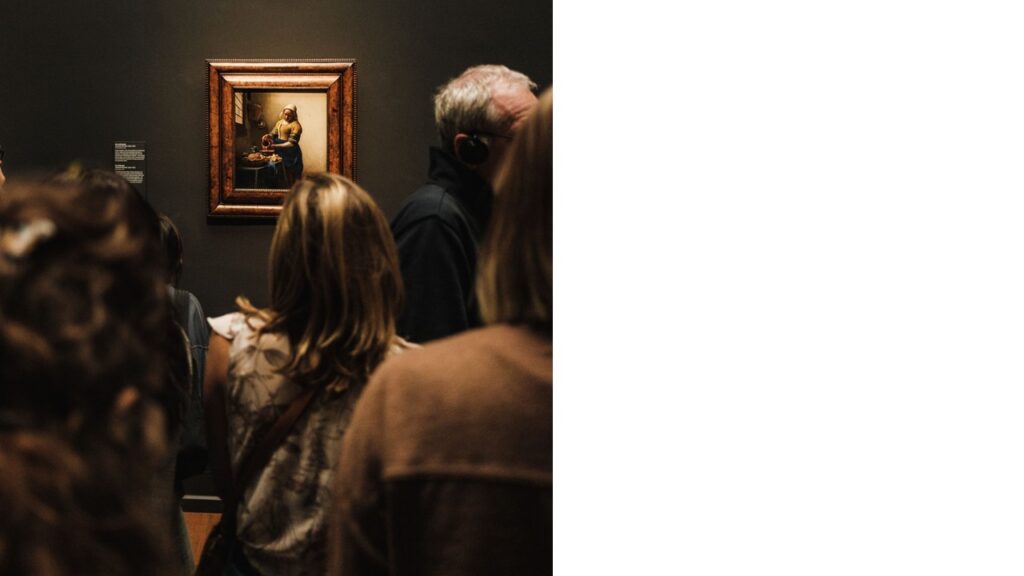
© Airam Dato-On – Viewing Vermeer’s Milkmaid
A great book on the importance of maintenance is titled The Innovation Delusion. Asset managers know only too well the ‘dynamic tension’ between building shiny new and keeping our existing systems going.
But a recent book – Peak Human, by Johan Norberg – bangs the drum for innovation in an interesting way. Given one proviso – that we fully acknowledge the horror of human slavery in the past – he suggests we know a golden age when we see one.
“A period with a large number of innovations that revolutionize many fields… in a short period of time.”
Its characteristics, he suggests, are creativity, science, technical achievements, economic growth, better average standard of living. As opposed to stagnation in thought, lack of optimism, lack of tolerance.
The book is a great romp through the usual suspects – Athens, Roman Empire, Renaissance Italy – along with the less familiar, at least to me: Abbasid Caliphate, Song China. The golden age Dutch Republic of trade, non-conformity, great painters, the middle class. The ‘Anglosphere’ from the Industrial Revolution onwards.
Times of curiosity – and a lack of crippling fear of others?
Innovation can’t just mean what the tech-bros say. Revolutionary innovations include doing without kings. With human, women’s and animal rights, and caring for the environment. I am very, very glad we finally understood about germs – and the importance of basic sanitation for everyone.
If innovation Is coming up with better ways of doing things, I am all for it.
But it can’t just be about technology.
- Can we embody a spirit of learning and sharing which isn’t predatory capitalism, instead includes caring for others and sustaining the assets we depend on?
- For feeling in our bones that sustaining is a triumph as much as inventing?
*Happy birthday to my niece Natalie, named in remembrance of the storming of the Bastille this day in 1789
Recent Comments