
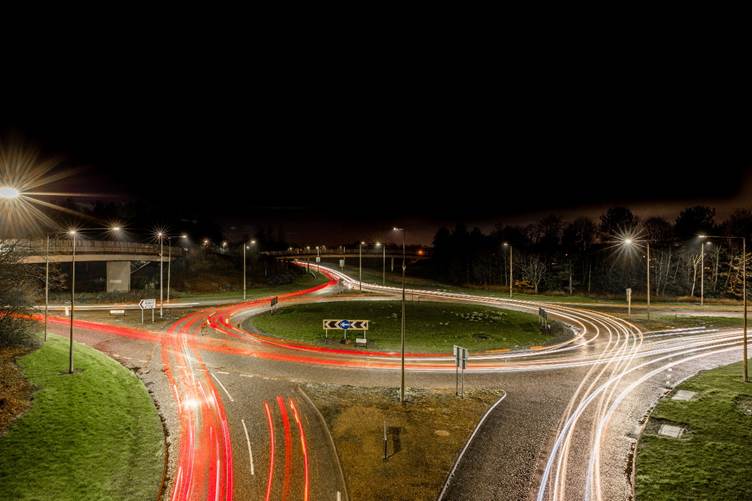
174608439 | Milton Keynes © Mr Paul Hanley | Dreamstime.com
I live in an old town, Newport Pagnell, best know for two road transport icons: the second motorway service station in Britain, and Aston Martin.
Newport is also part of the first new city in England, Milton Keynes. MK is famous for its roundabouts, over 130 at last count.
Roundabouts are fascinating infrastructure. They take up more room than traffic lights but they are much more efficient.
They raise questions about what good infrastructure looks like. Someone had the technical idea for them well before MK, but they also require changes in people’s behaviour. They are hard to retrofit.
What is the role of technical innovation in infrastructure? What are all the other things that have to go with the introduction of a technical innovation? What changes have to be forced on people for the technology to work?
I have driven around a Dutch roundabout while they still ran with priority from cars entering, not the vehicles already on it. Totally biased, this seemed like a very bad idea to me.
I have driven on a brand new roundabout in a central Washington town that was also scary, because I knew many drivers wouldn’t understand how they work: they take getting used to, with plenty of warning signs about priority.
I’ve sat at US four way stops and admired the discipline – British drivers really struggle with them – but, as I waited, also calculated that a roundabout would be faster.
I drive on Roundabout City’s roads, where inhabitants know they do not have stop, and everyone knows how to judge gaps. Out of towners run the risk of being rear-ended.
Curiously, small roundabouts on housing estates slow the traffic down. But the main, grid roads with large roundabouts at every main junction can be driven at 60 miles per hour. And you can drive straight through this city of a third of a million people and never see a single house.
Milton Keynes people love their roundabouts – but have to be warned about how traffic light systems work.

I was listening to an interview with a theatre director who observed that in innovative theatre it is necessary to create an environment where, as he put it, it is ʻsafe to failʼ. Not everything you try will work, he went on to say, so you rely on the generosity of your fellow actors to go along with you and give it a try.
It reminded me of the time I was directing a small Jewish play – with all non-Jewish actors – and my lead actor, at the very last rehearsal, chose to try out a lovely, but unexpected, Jewish accent. It completely flummoxed the entire cast. But they recovered for the opening night which went well. They had the requisite generosity of spirit.
My question is: Do we? If somebody tries something new, do we immediately reject it? Do we work with them to round off the awkward edges or do we carp and criticise? If it fails do we nevertheless recognise the beneficial intent and work with them to find solutions? If I had not had the support of the great engineers I worked with I doubt I would have been able to create a way of addressing the problem of planning and asset renewal that we now see as infrastructure asset management.
Not everyone can, or wants to be, an innovator. But we can all focus on the purpose and work with those who are able to solve some of the pressing problems of today. Innovation is ‘doing different’ – but not for difference sake! Anybody suggesting an innovation needs to be able to explain what problem they are addressing. Then others who can see the wisdom of addressing that problem can join.
The position of Asset Management Team Leaders is critical here. Team Leaders need to ensure that failure is not fatal, but rather a learning device. In particular, we need to prepare the level above us to recognise and support innovation by making sure that our boss understands and supports.
I am sure we have all had experience of what not to do, but focusing there won’t help. Rather, what experience have you had that can help others develop and support an innovative spirit?
Recent Comments