

Thanks to Michaela Schteurnagel at Pixabay
In her ‘Fire Horse’ post (August 13), Ruth issued a clarion call to all asset managers to create a better AM future, a future where change is the essence. How can we do this?
Well, fifteen years ago, Ruth, a few colleagues and I got together in London to consider how AM might develop. Using a Scenario Planning framework, we selected three pathways, each with two outcomes: strong (positive) and weak (negative) and 4 indicators to monitor each pathway. So six scenarios in all. An interesting thing about scenarios is that they can be used to track what is happening – but they may equally be used (albeit with considerably more effort!) to create the future we desire.
They may also be used, as our illustration by Michaela suggests, to leaf back and forth through time, as through a book. So we can look at how AM has developed over the last 15 years, and we can use the same thinking process to cast our eyes forward over, say, the next 15 years. It is often easier to start the thinking process by looking back. This may help us decide what pathway is needed to secure our desired future. Then it is a matter of ensuring that this pathway dominates.
The three pathways we considered were:
- A world where regulation dominates, and AM becomes a set of mandated operations and procedures;
- A world where the emphasis is on technology, AM becomes technical;
- A world where AM becomes the dominant management philosophy.
And the four indicators we chose to monitor were:
- How senior management viewed AM,
- The content of AM Plans,
- The impact of automation, IT, and risk, and
- How AM was treated in teaching, research, and publication.
Here, as an example, is Scenario 4, the weak (negative) outcome of the Technology pathway. You can see all six scenarios in ‘The Future of Asset Management?’, in ‘Penny’s Place’.
A world where the AM emphasis is on the technical.
Scenario 4, the weak (negative) outcome
Major characteristics in this scenario include: a lack of understanding by senior management, a failure to communicate, and a world in which asset management becomes mechanical, algorithmic, without considered judgement.
Senior management view
Senior decision-makers do not understand asset management. The asset management tools and technologies that staff are so interested in are dismissed as ‘toys for the boys’ and considered too expensive. Staff have to fight to secure funding and feel neglected and frustrated. Cost-saving innovations are made out of necessity but are not disseminated. Service is defined in technical terms.
Asset management plans
Asset management plans are a combination of operational tools and funding proposals and sometimes tend towards a ‘wish list’ of desirable projects. Management fails to clearly communicate organisational goals and staff are left, by default, to invent their own goals, few of which are documented. Asset management is seen as a subset of engineering, with little or no multidisciplinary involvement and very little communication between asset management and other areas of the organisation.
Automation, IT and risk/uncertainty
New models and approaches are eagerly seized on, and just as rapidly discarded in favour of newer models. Risk Management is highly regarded by staff, but uncertainty is either treated as a risk or not treated at all.
Teaching, Research and Publication
More emphasis is placed on teaching than research. There is little publication in academic journals, and such publication as there is tends to appear in association and trade journals, often focuses on only one group of assets rather than assets in general, and is more operational in nature.
Where to now?
These scenarios were developed in 2010 in discussion with Ruth Wallsgrove, Chris Lloyd, and Linda Newton While Ruth was to go on and publish two books on AM (with Lou Cripps), Chris to edit three very popular collected works, Linda to become the major contributor to the United Nations’ work on AM, and I to write ‘The Story of AM’, this was still all in the future. I wonder how we would frame the scenarios today and what indicators we would look for now?
More especially, what pathways would you choose, and what indicators? What is needed to get where you want to get?
PS. More has been added to Penny’s Place – check it out!

Today, to mark the 10th Anniversary of Talking Infrastructure (and my 85th birthday), we are re-launching the original amqi.com website as Penny’s Place. Permanent links to Penny’s Place can be found in the menu under Resources.
When I closed SAM in 2014 after 20 years, I retained the amqi.com website. For many years, it served only as a signpost to the newer Talking Infrastructure website. But two years ago we started re-creating it, restoring all 400 SAM issues, and as many of the original AMQ issues as we still had access to
In 1984, I began publishing my policy and practice newsletter for Asset Managers to share all that I was learning with others. It started with the Asset Management Quarterly, but within just a few years, it had become the fortnightly Strategic Asset Management. Now, anyone who has published fortnightly will know that searching out and writing on new ideas is completely absorbing. I loved it.
However, with the launch of ISO 55,000, and the recognition and adoption of AM by many engineering associations, both here and overseas, it was time for me to change direction. So, in September 2014, I published the 400th and final issue of Strategic Asset Management. For that issue, I asked many of those who had contributed to its pages over the past twenty years to write where they saw AM going in the future. I called that bumper issue “The Beginning”, because our future is always just beginning, although for me it felt more like an end.
In SAM, you will recognise many of the key names from that period across Australia, New Zealand, the UK and Canada. The stories are drawn from the three levels of government, the military and the private sector.
My new direction was to create the Talking Infrastructure Association. This organisation focuses on applying what we have learnt from Asset Management to make decisions that genuinely develop infrastructure ‘fit for people and the future’. Talking Infrastructure opened in 2016, and is going strong a decade later.
Then, in 2023, to ensure we do not lose sight of our origins, I wrote ‘The Story of Asset Management’. This book describes the birth of Asset Management, its struggles and growth over its first ten years, and provides illustrative stories showing how people reacted to the introduction of a new science. This took the story up to 1994, by which time the idea of AM was rapidly spreading. In March 1994, I started the newsletter to support new Asset Managers; in 1996, I created the International AM Competitions to encourage them; and in 1998, I launched amqi.com, a website covering all levels of asset management and free to all.
I aim to add a little more each month. As I re-read the earlier work, I find myself re-invigorated by the energy of that time, and I hope you will feel some of this too.
Please enjoy, Penny.

ID 3723955 | Weaving © Robert Paul Van Beets | Dreamstime.com
I like to think I was searching for Asset Management many years before I heard the term.
This raises a fundamentalist question: what is the deep essence of AM that I sought? Maintenance optimisation, asset data IT, modelling or planning processes: they are all in the mix.
Here’s a link to a Substack-length exploration. Let us know what you think.
Histories of Asset Management: What can we learn from the different strands?

Image by Mollyroselee from Pixabay
Before finding a solution, we first need to find the problem.
In last month’s post, I looked at two problems that we had solved. The first, insufficient housing and supporting infrastructure in the 1950s, was obvious and the solution simple. The second, asset renewal in the mid 1980s, took some finding, and the solution was far from simple, but once we understood what we had to do, we were able to do it. These are not our problems today, but what is? Fortunately, commentators on that last post have given us some clues. What do you think?
@Hein Aucamp observed that
“The first incarnation of AM tended to be asset-centric, renewal-based. Now it has moved to ever-greater levels of strategic consideration, delivering organisational value and services across an increasing set of measures, including sustainability. If AM stops taking into account emerging areas of value, it will definitely become less useful.”
Q1 Hein is right, it will. The question is, how can we know where to start and which new or emerging area to devote time to? What criteria could we use?
@Gregory Baird agreed with Hein that the AMgr’s work is broadening.
“Leaders can feel it: the work is getting more complex. Rates, regulations, climate, workforce, customer expectations — everything is moving, and everything is connected. Asset management can’t stay in its old lane”.
He suggested, “The next evolution is Integrated Infrastructure Stewardship — a holistic approach that blends financial architecture, demand behaviour, risk modelling, digital intelligence, and governance maturity into one continuous decision system. This is more than planning. It’s the operating model for the next generation of resilient cities and utilities. And it’s where the real opportunity lies for leaders who want to build systems that last.”
As exciting as this sounds, in theory, is it possible in practice? The AMgr, even the AM team, is no superman. Forty years ago, the problem was relatively simple. We knew the focus was asset renewal; we knew what we had to do, at least in principle, to get it. The Life Cycle Renewal Model gave us a tool and an approach.
Q2 Where is today’s ‘key question’ and what tools and approaches do we now need? Is the Life Cycle Renewal Model relevant to our new problems/
@Ian Greenwood challenges the idea that we have to be all things to all men. He argues,
“While the more advanced parts of AM have benefited a small group of infrastructure entities where chasing the 4th decimal point of reliability is of value, IMHO, the vast majority would benefit from just getting the basics right and avoiding the distractions of all the shiny bells and whistles.”
Q3 Do you agree? Is the ‘excitement of the new’ luring AMgrs into fields where they are able to contribute very little? And, if so, how do we, as an industry, cope with that?
@Martin Grey avoided the ‘do everything’ approach and focused on just one, ‘managing uncertainty’. He argued that
“Recognising and actively managing uncertainty is essential for making better decisions in the present and shaping more informed decisions in the future. This, of course, depends on having the right management information in place—supported by a continuous improvement capability that identifies emerging trends early, enabling timely intervention before issues escalate into incidents or crises.”
Q4 This got me thinking. I like the one-point focus, but does ‘managing uncertainty’ really depend on having ‘the right management information in place? ‘ If it truly does, we are done for. Not the least because it is probably impossible to tell in advance what the ‘right’ information is. And whatever it is, we probably don’t have it.
But surely it is right to focus on ‘continuous improvement capability’. Sounds exhausting, doesn’t it? But in the early days of asset management, that was what we were all doing.
@Philip Tiewater. His comment on the Talking Infrastructure blog is qualitatively different from the earlier comments. Philip says,
“This is a timely topic. In many cases, the infrastructure we have is not as necessary as once thought. Shifting commuting patterns, new regulations, and sea-level rise should drive more conversations about devolution (paved roads to dirt roads), repurposing (vehicle bridges to pedestrian bridges), and removal (replacing traffic signals with roundabouts) rather than life extension. The lowest-cost lifecycle decision is often not to (re)build it in the first place.”
Q5 I like this for it applies basic AM thinking to making ‘fit for the future’ AM decisions, and recognises that this applies not only to new assets but also to the replacement and modification of existing assets. What do you think?
OK. Here we have five suggestions. Where do we go from here?
My sincere thanks to Hein, Gregory, Ian, Martin and Philip.

ID 72282390 | Cane Toad © Seregraff | Dreamstime.com
In 1935, Queensland was suffering significant damage to its sugarcane crop from the cane beetle. To contain the beetle, 101 toads were released. They were expected to eat the beetles, but they didn’t. Instead, they thrived, spreading rapidly; today, these poisonous toads present a serious and worsening problem across northern Australia, moving southwards.
In this way, what was thought to be a solution ended up being a problem. The toads failed to solve the initial problem; the cane beetle remains, although the cane toads themselves are far more concerning. This is a story well known in Australia. Even successful solutions, acknowledged by all, may still become a problem if continued beyond their time.
In the 1950s, Australia faced a major housing problem. The combination of returned soldiers, the beginning of the ‘baby boom’ and increasing numbers of refugees and migrants led to a rapid rise in population. Demand for housing so far outstripped supply that it was not uncommon for three families to share one house. This, indeed, was the situation for my family when we arrived in 1950. The problem was visible and obvious to all, and the Government addressed it by funding large housing estates. The companies paid to undertake this work grew in size because that was what was needed to get the job done. They were successful.
In the mid 1980s, Australia faced a new problem; infrastructure assets were approaching the age at which they would need renewal, and this hadn’t been planned for. This time, the problem was not at all obvious; it was not until the cost of capital consumption had been recognised, enabling the likely, and extremely high, future costs of infrastructure asset renewal to be demonstrated, that it was recognised as needing attention. This was not amenable to a simple ‘throw more money at it’ solution as the earlier problem had been, and, in any case, the Government no longer had plentiful funds. This problem needed a very different solution, and it found it in the development of a new class of specialists: the Asset Managers.
But back to our cane toads. The extreme urgency of the housing problem had largely passed by the mid-1960s, but the development companies, now very large and influential with the Government, were able to encourage continued growth of infrastructure. However, as Asset Managers strove to bring the renewal problem under control, it became clear that creating new infrastructure only made the task of renewal more difficult, as demonstrated by two major case studies in Victoria and South Australia.
Now, cane toads and large development companies are not malevolent; they are simply aiming to survive, as all organisms and organisations are designed to do.
Where do we, as Asset Managers, stand? Before assuming we are all necessarily on the side of the angels, we need to consider that we can, in our turn, also become cane toads. When the need was to plan for and manage renewal, we were the solution. To address that problem, we considered extending the lifespan of our existing assets; this gave us time to plan for change. And we had time! While we could see what needed to be done, it didn’t have to be done immediately. So we adopted a slow and thoughtful way of moving. Is this still appropriate? Life cycle renewal models were then our tool of choice. Are they still?
Are we acting as if the problem of the mid-1980s remains today’s problem, and that asset longevity is the solution? It isn’t. In today’s rapidly changing world, flexibility needs to trump longevity. Also, the very idea of what infrastructure is, and what it is for, has grown far beyond the simple ideas we had 35 years ago.
Are we moving on? Talking Infrastructure was created to address the problem of decision-making for ‘fit for the future’ infrastructure. What should be our new aims and objectives? And what new tools and techniques are we developing to address them? Unless we constantly adjust and learn, today’s Princes of Asset Management can easily turn into frogs – or, worse, into cane toads.

ID 6497422 © Hans Slegers | Dreamstime.com
Several of us on the Talking Infrastructure Board will never write an AMP again.
That is, we are retired from paid AM work; but then we already have maybe 150 years of experience of Asset Management between us.
Using the Waves concept created by Penny Burns and Jeff Roorda, we propose two roads ahead for Talking Infrastructure.
The first, working title The Way of the AMP, is to collate and disseminate what we know about Wave 2 strategic Asset Management in useful formats, including Penny’s SAM archives. But we want to do more than capture current practice: we want to challenge and stretch AM practice within infrastructure organisations, including better risk, strategy and information management. People who are still pioneers in this space include Jeff Roorda and Todd Shepherd.
For this we are bringing in more and younger people still developing in their AM careers around the globe to add and challenge.
The second is to go beyond Wave 2, to ask better questions about infrastructure decision-making in our societies. Here, some current AM thinking may be part of the problem, not the solution to the challenges we face in the 2020s.
What are the infrastructure-related issues now? How have they changed since Penny created AM in the 1980s, to deal with problems inherited from the 1950s post World War II?
What does it mean to be a future friendly infrastructure planner in 2026?
Your input, please.

ID 26212151 | Child In Shallow © Pavla Zakova | Dreamstime.com
When we look back at the history of Asset Management, there is one curious feature.
In a world in which many people go on about data, many act like the revolution of AM is the discovery of asset data.
Why?
Penny many years ago made the point – well, that the point is making better long-term decisions about assets. Wave 1, ‘asset inventory’, only has any value when we use such data to make better decisions, in Penny’s Wave 2: strategic asset management. As Penny says, when you focus on the decisions, you have a much clearer idea of what data you actually need. Wave 2 improves Wave 1.
But there must be some kind of reason why organisations seem to have to go through Wave 1, collecting and organising data, first.
Cynically, we might think it’s because it’s easier than questioning decision-making: something middle level asset managers can do without challenging business at the top level. Or, and/or, there are plenty of suppliers willing to sell you help in collecting data or implementing the transactional IT systems to put it in. Few that actually know how to make better decisions.
But I come to suspect that, weirdly, asset-centric data is more radical than it sounds. What suggests this is how hard other teams kick and scream about collecting and handing on asset inventory, the very basic data on what assets we have where. (Capital projects, IT, even some maintenance teams.)
It doesn’t seem to help to stress that we cannot manage what we don’t know we have. Is the problem that they don’t understand that we do have to continue to manage assets into the future?
Or is it – back to basics – that the whole concept of an asset is the first revolution?
Other people manage projects, budgets, sites, even value on the balance sheet. Only Asset Management believes the fundamental unit of management is the operational asset.
Can we rewrite the advice on implementing Asset Management to get us to decisions faster?
Are too many organisations still not making that very first leap into the water?

The Board of Talking Infrastructure wants to thank Penny – wants to make a big, big fuss over Penny – for the immensity of what she means to us and to Asset Management.
All of us had our lives and careers changed by Penny. Without her, we wouldn’t be calling ourselves asset managers, for a start. We are doubly blessed that she is also a great friend to each of us individually.
I first knew of Penny when another important AM person in my life, David Ford, came back from a trip to Australia and New Zealand in 2001 clutching a copy both of the International Infrastructure Management Manual and an issue of Penny’s Strategic Asset Management newlsetter. Saying there were some things we therefore would not have to make ourselves, and anyway could never have done so well.
I already was sure when I met Penny in person in 2004 at ICOMS we would be fast friends, going to stay with her and Bob in Adelaide on the MESA ‘eminent speaker’ tour that summer. My life certainly was never the same after that, as the next year I went back to work with her on a job for NSW Rail Corps… and the year after to live in Sydney. Where she and I could plot some more, ending up eventually with Talking Infrastructure itself.
Of course, the price I paid for her continuous inspiration was knowing I would always been running to catch up – sometimes several large steps behind her thinking. But that was always so much fun.
One thing I am most proud of is spreading her words around North America, making sure new assets managers knew who she was and her vision for infrastructure Asset Management. She has quite a fan club of younger women around the globe, including the USA. I would like to claim I am fan #1, but there are many pioneers in the queue ahead of me.
Talking Infrastructure would like to publish your memories and appeciation of Penny. When did you first come across her? Where did you take the ideas she inspired?

I have retired.
I thought I could never retire, but I have. I am still greatly interested in issues facing those who have to make decisions on our infrastructure but for Talking Infrastructure to continue and expand I have handed the reigns over to my younger board members and activists. They will now determine its future directions and I will watch with pride.
This does, however, free me up to turn my original website, amqi.com, created back in 1998, into something more than the redirection signpost it has been since creating Talking Infrastructure in 2016. With encouragement from our IT Director, Gregory Punshon, and our Lead Director, Ruth Wallsgrove, I am creating “Penny’s Place” on amqi.com which, when finished, will become an integral part of Talking Infrastructure. I will be unploading all 400 issues of Strategic Asset Management which were originally published between 1998 and 2014.
The SAM Issues are a great timeline of the issues and the practitioners who led the development of Asset Management over these years.
In addition, I am classifying the major articles, some 1200+ of them, to make your access easier. It is a big job and will take a few months but we will let you know when it is done.
You will be able to see what people were thinking when the practices we take for granted today were first established, why they did them and what they hoped to get out of them. You may even be able to determine where some may have gone off the rails and hopefully then be in a better position to course correct.
Of course, not all the issues we are dealing with today are old issues. Asset Management would be really boring if that were the case.
Its future history is in your hands.
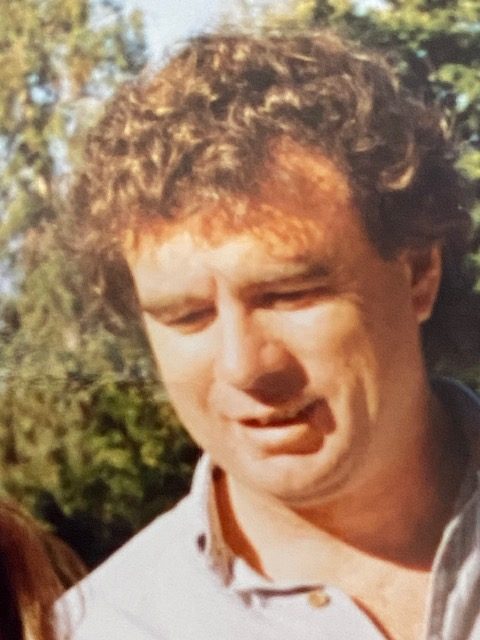
This week my oldest and dearest friend, Bob Ritchie, the Secretary of the PAC, died after a valiant fight against Leukemia. I was able to see him just a few days before he passed on Tuesday last week. His influence on AM was immeasurable, but largely untold.
It was Bob who recognised, 40 years ago, the potential of the work I had done for predicting the likely cost and timing of water and sewer infrastructure renewal to be applied to all major state infrastructure and who convinced the Parliamentary Committee to engage me to do a research project where they had never done one before. He worked with me on all eight reports to Parliament and saw, where I did not, the opportunity of a vaguely defined job vacancy in public works to be converted to, as he put it, ‘anything I wanted’, which I interpreted as the opportunity to spread the AM message Australia-, and indeed, world-, wide.
A few years later he was my major support in developing the International AM Competitions and then again when I started Talking Infrastructure. He was always there, encouraging, supportive. So much he contributed! Yet hardly anyone in the AM community would know his name. True, he featured in ‘The Story of Asset Management‘ as he should, and I am glad I had the opportunity to say Thank You before he died.
Vale Bob Ritchie. 01.02.1942 – 11.03.2025
Recent Comments