
Jo Parker
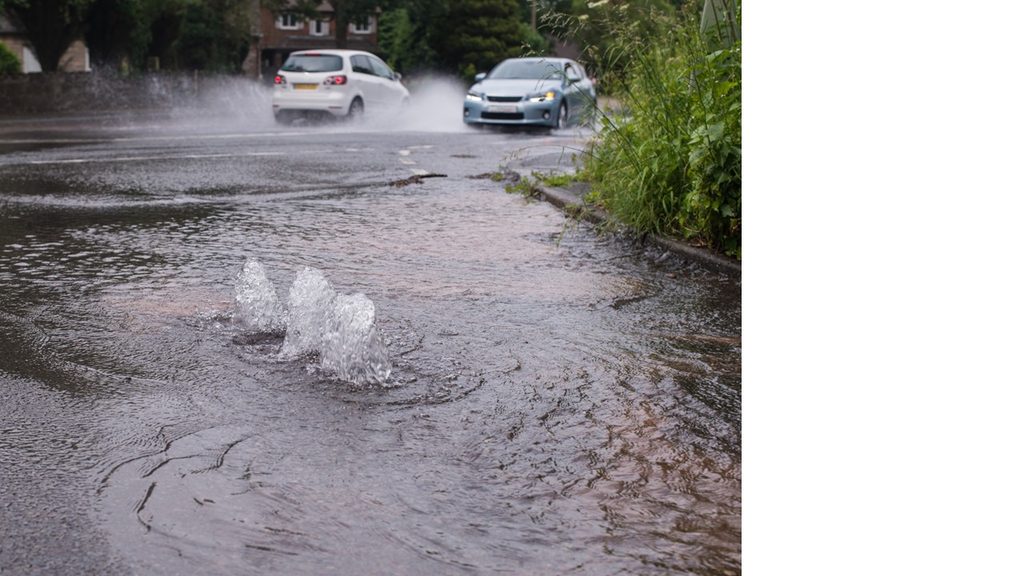
31904587 | Burst Water Main © Nigel Spooner | Dreamstime.com
A stitch in time saves nine is never more applicable than to water company assets. Maintaining assets before they fail is far easier than waiting for them to fail.
However, until recently, investment in maintaining buried infrastructure has suggested that pipes should last around 2000 years, which is unlikely. A burst main or a failed sewer can cause thousands of pounds’ worth of damage and pose a risk to public health.
The UK National Engineering Policy Centre, a consortium of engineering organisations led by the Royal Academy of Engineering, considered this such a major issue that it prepared a report, ‘Reviving our Ageing Infrastructure’ (https://nepc.raeng.org.uk/policy-work/ageing-infrastructures/reviving-ageing-infrastructure-report/). The report was aimed at the government to demonstrate that expenditure on infrastructure assets is money well spent, saving between £5 and £10 for every £1 spent.
The report identifies seven cross-cutting enablers of change which are needed to achieve a robust and sustainable approach to infrastructure investment, namely:
- Outcomes, regulation and standards: We require a long-term vision for reliable and resilient infrastructure that meets future societal needs, underpinned by regulations and standards.
- Financing for the long-term: Long-term financing with the flexibility to optimally balance proactive maintenance, renewal, and enhancement of infrastructure assets.
- Skills and capability: A well-supported, respected and skilled workforce, equipped to develop and deploy new and established techniques, to steward the UK’s ageing infrastructure systems.
- Data – Accurate data and digital tools: They must be the backbone of proactive infrastructure management, turning status and trend information into actionable insight to optimise the nature and timing of maintenance and renewal interventions.
- Innovation: Plans to actively encourage purpose-driven and collaborative innovation to extend the life of ageing infrastructure to minimise cost and disruption.
- Societal awareness: A new narrative needs to be fostered where maintenance, renewal, and enhancement of existing infrastructure are valued, and the trade-offs between them can be productively debated.
- System Coordination: Enhancing coordination across infrastructure systems through clear roles, aligned governance, and shared information, enabling effective stewardship of assets that span sectors, regions and authorities.
In AMP 8*, capital investment in the water industry in England and Wales has increased dramatically, with the total amount almost double that of AMP 7, supporting the largest investment programme in its history.
While some of this expenditure is needed to address, for instance, the shortfall in water resources caused by population growth, climate change, and initiatives to reduce abstraction from sensitive aquifers, much of it will be needed to renew or replace ageing infrastructure that in some cases dates back to Victorian times.
This money must be spent wisely, with projects focusing on where assets are at the end of their life. Appropriately targeted investment requires more extensive asset surveys and a better understanding of deterioration rates. New technology is enabling these assessments, along with other techniques developed to minimise disruption to existing networks or the roads under which they lie. It is important that everyone involved understands the options available, the pitfalls to avoid, and techniques that can help keep customers in service.
This problem is not unique to the UK. Many countries worldwide are struggling to cope with the deterioration of key assets, some of which were installed decades or even centuries ago. Many cities were established in the 19th century, and some assets can date back to that time.
Sadly, maintenance of these assets is often seen as secondary to installing new infrastructure. Replacing valves or meters does not attract as much attention as a new treatment plant, and water utilities worldwide may struggle to secure funding or even identify the best way to tackle ageing assets.
An event at the IWA World Water Congress offers an excellent opportunity for people to both learn and contribute ideas in a workshop, ‘Practical Approaches to Managing Ageing Assets’. This workshop will focus on the practical aspects of projects that monitor, assess the condition of, and renovate assets, including how projects were drawn up, supplies were maintained, and contracts were managed.
The chairs will be two of the members of the Royal Academy of Engineering working group for ‘Reviving our Ageing Infrastructure’, Jo Parker and Graham Dalton, and the speakers will outline projects from across the world before the attendees have a chance to discuss in table groups what information and help they need and identify successful projects.
The workshop aims to share knowledge of technologies and techniques to manage and renovate ageing assets while minimising costs and disruption to customers. The session will also aim to identify attendees and other IWA members with practical experience, which can be compiled into an IWA publication or guidance document issued via the IWA platform under the same name as the workshop title.
It is hoped that through collaboration and cooperation, the water industry worldwide can continue to serve its customers even if the assets date from tens or even hundreds of years ago.
* In England and Wales, the water companies (all private) have to produce a 5-year plan for each price review held every five years. AMP8 will be the eighth produced since privatisation in 1999.
Recent Comments